
NEW! Video Cost Calculator. Get an estimate for your project in less than a minute.
for Modern Enterprises
Corporate animated video production turns internal communications, training and stakeholder messaging into clear, on-brand animated video — scripted, storyboarded, designed in your brand system and delivered ready to publish.
Elevate your internal communications, employee training and stakeholder presentations with high-end corporate animation and motion graphics.
TRUSTED BY TOP BUSINESSES IN NORTH AMERICA AND GLOBALLY
Streamline your HR pipeline. Replace long text manuals with interactive, step-by-step animated training videos that clearly explain company compliance, security protocols, and operational workflows.
Here are examples of the animated corporate videos we make and the stories we have told. As a corporate animation company, we will help you tell your story and build your brand.
Animated commercials grab attention without a shoot, a location or a cast. We produce broadcast-ready animated spots and cut them down for YouTube ads, paid social and OTT.
Animation gives you full control of the frame, which makes it the reliable choice for product launches and brand awareness campaigns that have to run across several markets.
When competitors sound the same, narrative wins. Animated brand storytelling turns your positioning into a memorable piece of corporate animation.
It works for employer branding, thought leadership and corporate marketing videos, helping audiences connect with your “why” and choose you faster.
Animated internal communications keep global, distributed teams aligned. Quarterly updates, policy changes, restructures and executive messages become short animated videos your people will actually finish.
Because nothing is filmed, the same video is easy to update when the numbers or the org chart change.
Animated training and onboarding videos replace long text manuals with step-by-step animation that shows the process rather than describing it.
It suits compliance, safety, security protocols and operational workflows, and it drops straight into your LMS in the formats your platform expects.
2D animated corporate videos let you explain complex services without the constraints of locations, schedules or on-camera talent.
This style fits internal communications, training videos and brand messaging, especially when you need consistent visuals across campaigns and teams. Many are built with our 2D animation services, a flexible style for training, onboarding and company-wide communications.
Animated corporate explainers reduce friction at decision points: what it is, how it works and why it matters.
Motion graphics and character animation create clarity for sales enablement, onboarding, product education and conversion-focused landing pages.
We start by getting clear on your goals, your audience, and what you want the video to accomplish. Then we develop the concept and creative direction that becomes the foundation for the script and the rest of the production.
Our writers get to work, developing a script that matches your intent and speaks to your audience. The right words, emotional triggers, and story structure all play a key role in the success of your message. If the story sucks, animation won’t save it.
With the final video approved, we prepare everything for delivery. You get the final video file plus 10–15 cutdowns and supporting assets designed to help you get more mileage from the video across different channels.
Creamy Animation is an explainer video company headquartered in Vancouver, British Columbia, with a U.S. office in Vancouver, Washington, producing corporate animation for organisations across North America and further afield. Corporate work is different from a one-off marketing video: there is an existing brand system to respect, more than one person who has to sign off, and usually a second and third video coming behind the first.
We have produced corporate animation for International Paper, Canonical, Providius, Corky’s Dine In and MTG Traders, which covers everything from a manufacturing giant to an open source software company to a regional restaurant group. The constant is that we plan the first video so the rest of the programme gets easier.

Corporate projects rarely stall in animation. They stall in review, when four people give conflicting notes on a frame that was approved a month ago.
We name one approver per stage and get the script signed off as a written document before any design begins. Comms, legal, HR and the executive sponsor all read the same page and mark it up in one place. Once that document is agreed, the storyboard and animation follow it, and a note that reopens the script is treated as a scope change rather than a revision.

Most corporate clients arrive with a brand book, a font licence, an icon set and an approved colour palette. We build to those rules instead of asking you to bend them, and where the brand book has nothing to say about motion, we write that part and hand it back to you.
That means agreed easing and timing, a title treatment, a lower-third, a logo endcard and a transition set. Your next agency or in-house editor can pick up the same kit and stay on brand without calling us.

The first corporate video carries the cost of the decisions: art direction, character design, motion rules, voice casting. Videos two through six reuse those decisions.
When we scope a series we build the asset library deliberately so later episodes need new script, new scenes and new voice work but not a new visual language. Committing to a batch up front lowers the per-video cost and shortens each round of production, and you can see the full breakdown on our video cost guide.

Corporate videos are an essential part of every organization because they help communicate with your internal teams, stakeholders, and customers in a more personal way than any other content can. Videos are your sales agent that works 24/7, 365 days a year.
When visual and auditory senses are stimulated with video, people will remember more of your content.
Considering short attention spans, a short video will get your message across faster and better.
Customers buy from brands they trust. Building trust is fundamental to the success of your business.
You need a reputable corporate animation company like Creamy to produce videos that easily connect with your audience.
A corporate video on a landing page or in a sales deck answers the same five questions your team answers on every call. Prospects arrive already knowing what you do, so the conversation starts further along.
It also travels. A buyer forwards a two minute video to a colleague far more readily than a twelve page PDF.
The return on a corporate video comes from how many places it works. One master video becomes a website hero, a sales deck embed, a trade show loop, an email asset and several social cutdowns.
Build it with that in mind and you commission once. Build it for a single placement and you pay again the next time a channel needs its own version.
3D CORPORATE VIDEOS
ANIMATED LOGOS
2D CORPORATE VIDEOS
CORPORATE PRESENTATIONS
SOCIAL MEDIA MARKETING
Our video production services cater to a wide range of industries, including:
Marketing & Advertising Agencies – Animated ads, branded content, and campaign videos.
E-Learning & Education – Engaging instructional animations and course materials.
Entertainment & Media – Title sequences, broadcast graphics, and streaming content.
Tech & SaaS Companies – Product demos, UI animations, and explainer videos.
Healthcare & Pharmaceuticals – Medical animations and patient education videos.
Corporate & Training – Internal communications, presentations, and training modules.
Software teams can explore our focused SaaS explainer video production.
Marketing a product or campaign instead? See our promotional video production service.
Not sure what to produce? See the types of business videos.
Almost every corporate video brief falls on one side of a line: it is either aimed at people who already work for you, or at people outside the organisation who are deciding whether to invest, buy or join. The subject matter can look identical. The tone, the length and the approval path are not. Decide which side of the line your video sits on before you write a word of script.
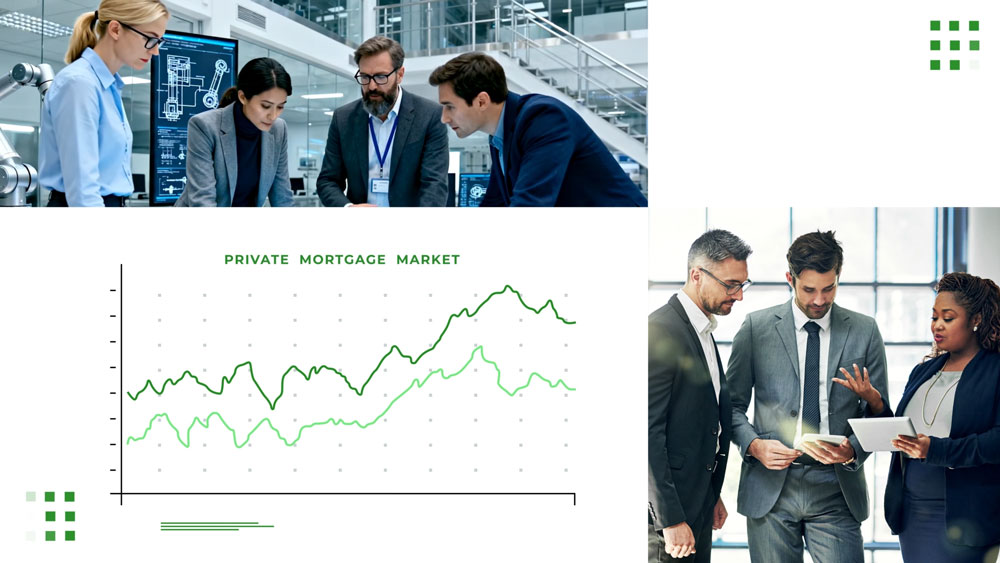
Internal video is watched by an audience that already knows the acronyms, so you can get to the point in the first ten seconds. What internal audiences do need is candour. The common briefs are the quarterly all-hands recap, a change communication, a values and culture piece for onboarding, and a recruitment video.

External corporate video carries more risk, so it carries more review. An investor relations or annual report piece will be read by legal before it goes out, and any figure on screen has to match the filed document exactly. For product-led work aimed at buying committees, our B2B video production page covers that use case.
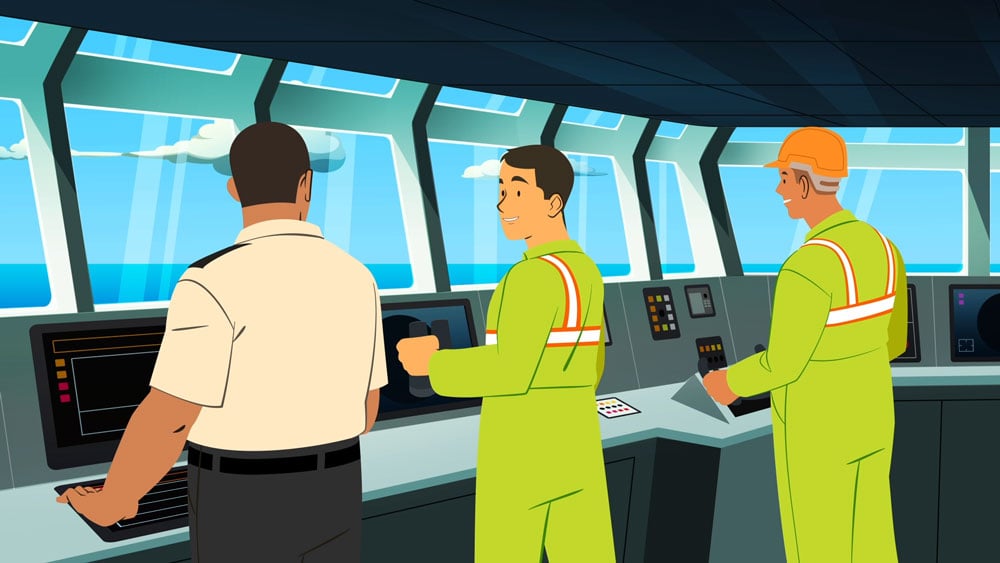
As a rough guide, internal announcements run 60 to 120 seconds and clear one or two approvers. Culture and recruitment pieces run 90 seconds to three minutes and add HR. Investor and annual report video runs two to four minutes and adds legal and finance, which usually adds two weeks to the calendar.
A single corporate video is a project. Four videos a year is a system, and systems need governance. The organisations that get the most out of video are the ones that treat the first project as the moment to build reusable infrastructure rather than a one-off deliverable. It is also why we push back on ad hoc one-off requests from different departments: five videos commissioned separately cost far more than the same five planned as a set.

Before we design anything we ask for the brand book, the licensed font files, the logo lockups in vector, the approved colour values including any accessibility-safe alternates, and any existing illustration or icon library. What brand books almost never cover is motion, so we write that section and deliver it as a short motion guideline your team keeps.
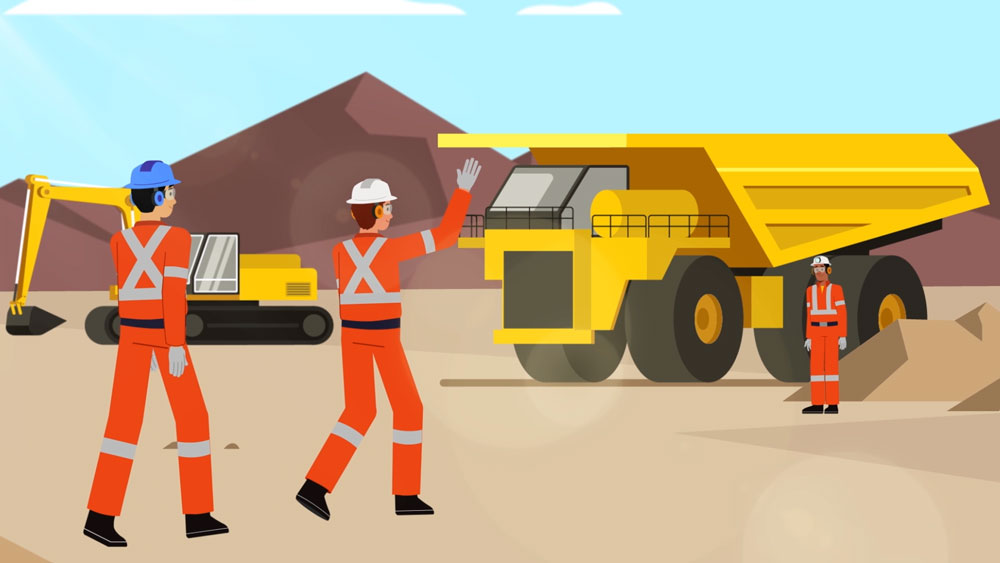
The practical output of governance is a kit: a title and lower-third template, a logo endcard with a locked safe area, an icon and illustration library built in the brand style, a caption and subtitle style, an approved transition set, and a music and voice pairing so episode four sounds like episode one.
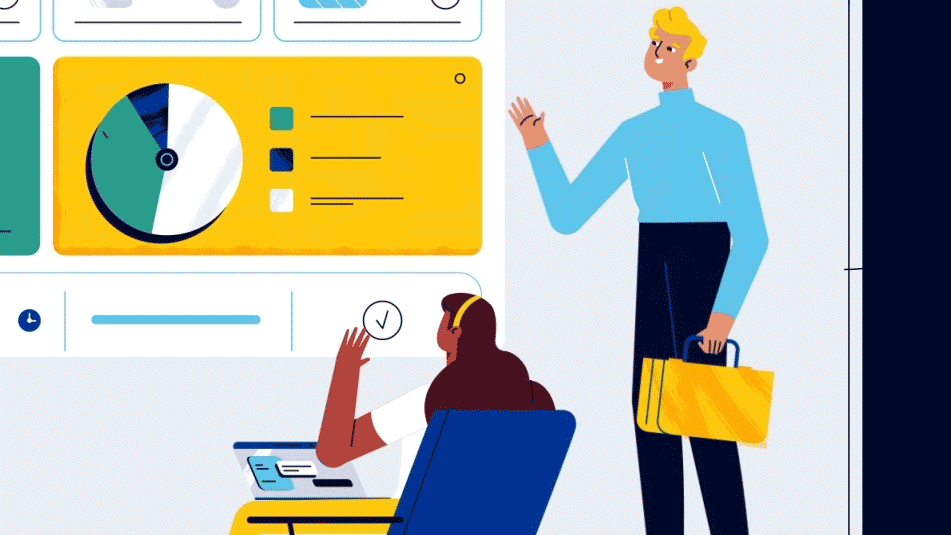
Name your files in a way that survives a year of turnover, keep the approved cut clearly separated from working cuts, and archive superseded versions rather than deleting them. Ownership should be settled in writing before production. On our projects, once the scope is delivered and payment is settled, you own the finished video outright.
Corporate video schedules slip for one reason more than any other, and it is not production capacity. It is review. A 1 to 2 minute animated video takes 4 to 6 weeks of actual work. The same project can take four months if the script bounces between departments with no owner.

Every stage needs one person who can say yes on behalf of everyone else: script, storyboard, design, animation. Other people can comment, but only the named approver signs. Write the names down at kickoff. If the executive sponsor is going to see the video for the first time at the animation stage, that is not a review, it is a restart.
The script is the cheapest thing to change and the most expensive thing to change late. We circulate it as a plain document with the voiceover on one side and the on-screen action on the other, so a reviewer who has never approved a video can still tell what they are agreeing to. Once the script is signed, we lock it.
Set the review window at kickoff and put it in calendars: three to five business days per stage works for most corporate teams. Collect notes in one shared document rather than in separate email threads. Get legal and compliance to read the script, not the finished animation, because that is the stage where their edits are free.
Most corporate video shortlists come down to three studios whose showreels all look competent. Reels tell you what a studio can make when everything goes well. These questions tell you what happens when it does not.
Do you build a reusable template and asset kit, and do I keep it? If every video in a series is built from scratch, you are paying for the same design decisions repeatedly.
How is the revision structure defined? Ask how many rounds per stage, what counts as a round, and what happens when an approved stage is reopened. Vague answers here become invoices later. We work to three rounds at each stage and say plainly when a request is new scope.
What is the licence term on the music and the voiceover? Library music is often licensed per project and per channel. A voice artist may be booked for web use but not for paid advertising or broadcast. If you plan to run the video as a paid ad, say so before casting, not after.
Who owns the project files? There is a difference between owning the exported MP4 and owning the layered source. Get it in writing.
How do you handle a multi-video programme? Ask how the studio prices video four differently from video one. If there is no difference, they are not planning for reuse.
Most standard corporate videos land between $5,000 and $10,000. That covers script, storyboard, custom design in your brand, professional voiceover and full animation at a typical 60 to 90 second length. Premium projects run $10,000 to $25,000 when the design is bespoke, the storytelling is more ambitious or there is character animation. Enterprise programmes run $25,000 to $50,000, which usually means a series, multiple languages, or investor-grade data visualisation with the review process that comes with it. AI-assisted production is available in the $2,500 to $4,000 range for simpler internal pieces where speed matters more than a custom visual identity.
A useful way to read a quote is by where the effort sits. Roughly 10 percent of a budget goes to script, 25 percent to concept and storyboard, 15 percent to design and illustration, 45 percent to animation and editing, and 5 percent to voiceover and music.
That distribution explains most price differences. Character animation costs more than motion graphics because it multiplies the work in the largest line item. Bespoke illustration costs more than working from an existing icon library. A second language is cheap if you planned for it and expensive if you did not.
It also explains why a series is cheaper per video. Concept, storyboard and design are largely front-loaded, so once they are done, later episodes spend their budget mostly on animation. Committing to a batch of four typically produces a lower per-video price than commissioning four separate projects, and our detailed cost guide breaks the maths down further.
Based in British Columbia? See our corporate video work for BC organizations in the Small Business BC case study.
The questions corporate communications, HR and marketing teams ask us most often before starting a project.
A 30 to 60 second corporate video takes about 2 to 3 weeks. A 1 to 2 minute video takes about 4 to 6 weeks. Those figures assume review notes come back within three to five business days at each stage. In a large organisation, the calendar is usually set by how fast script sign-off happens, not by how fast we animate.
Most standard corporate videos fall between $5,000 and $10,000. Premium projects with bespoke design or character animation run $10,000 to $25,000. Enterprise programmes, typically a series or a multi-language rollout, run $25,000 to $50,000. AI-assisted production for simpler internal pieces starts around $2,500 to $4,000. Length, animation style and the number of custom-designed scenes move the number more than anything else.
For external and explainer-style corporate video, 60 to 90 seconds is the reliable range. Internal announcements work at 60 to 120 seconds. Culture and recruitment pieces can run to three minutes. Investor and annual report video often runs two to four minutes because the content is dense. Social cutdowns are 10 to 30 seconds. If a script runs long, split it into two videos rather than speeding up the voiceover.
Three rounds at each stage: script, storyboard, design and animation. A round means one consolidated set of notes from your named approver, not four people sending separate emails. Reopening a stage that was already signed off, most often a script change after animation has started, is quoted as new scope because it means rebuilding scenes.
Once the project is delivered and payment is settled, you own the finished video outright. Talk to us at the start if you also want the layered source files, since that changes what we hand over at the end. Music and voiceover carry their own licence terms, and paid advertising or broadcast use may involve additional usage fees, so tell us where the video will run before we cast a voice or select a track.
Yes, and it is the normal case. We build to your brand book, licensed fonts, vector logos and approved colour values. Where the brand book has nothing to say about motion, which is most of the time, we write that section during the first project and deliver it as a short motion guideline your team keeps for future work.
Name one approver per stage: script, storyboard, design and animation. Others can comment, but one person signs. Internal announcements usually clear comms and the department head. Culture and recruitment pieces add HR. Investor and annual report video adds legal and finance, which typically adds around two weeks to the schedule even when the animation is straightforward.
Yes. The first video carries the cost of the decisions: art direction, character design, motion rules and voice casting. Later videos reuse that kit and spend their budget mostly on new script, new scenes and new voice work. Commissioning four videos as a planned batch is meaningfully cheaper than commissioning four separate projects, and each one moves through production faster.
Decide before writing the script. Internal audiences already know your acronyms, so you can skip the setup and be direct. External audiences need context and the content will face legal review. Trying to make one video that satisfies employees, customers and investors at once usually produces something none of them remember.
Yes, and it is far cheaper if you tell us at kickoff. When we know localisation is coming, we build on-screen text as separate layers and keep the timing flexible, so an additional language needs new voiceover and a text pass rather than a rebuild. Retrofitting localisation into a finished video usually means reanimating scenes.
Once the scope and cost are agreed we collect a deposit and begin. Before that call, it helps to know who the video is for, roughly how long you want it, who your approvers are, and whether this is a one-off or the first of a series. If it is a training or onboarding project, our corporate training video production page is the better starting point.
Request a free quote to get started
Explore more ways we help businesses communicate clearly.
Explain technical products so decision-makers act fast.
Lead-gen and sales enablement video content.
Onboarding, safety, and compliance training at scale.