Medical Animation & Healthcare Video Production: Examples & Cost (2026)
We produce animation for renal programs, fertility clinics, mental health organizations, and health nonprofits. Some of it is true medical animation. Most of it is the wider healthcare video work that sits around it. Here are four examples, what the field actually covers, and what it costs.
What is medical animation? It’s animation that visualizes the body, a device, or a biological process with clinical accuracy. Healthcare video production is the wider field around it: patient education, healthcare software, mental health, training, and public health. We produce both. 2D work starts at $5,000 to $10,000, and custom 3D runs $10,000 to $25,000 and up.
Medical animation and healthcare video are not the same thing
Medical animation is the narrow, technical end: anatomy, physiology, a drug binding to a receptor, a device doing its job inside the body. It exists because a camera can’t go where the explanation needs to go.
Most of what health organizations actually need sits around that. A renal program explaining dialysis to patients. A clinic explaining a fertility test. A nonprofit explaining its services to the people entitled to them. Same craft, different brief, and usually a very different budget.
Why animation instead of filming
Three practical reasons. A camera can’t reach inside the body or work at cell scale. Filming real patients or live procedures brings consent, privacy, and scheduling problems that animation avoids entirely. And when the science or the label changes, an animated scene can be corrected without reshooting anything.
Accuracy and sign-off
We work from your source material, and your subject-matter experts sign off the script before anything gets drawn. On regulated content we treat each approval round as its own scheduled stage, so nothing arrives at the end as a surprise. It’s slower on paper and faster in practice.
What healthcare video production covers
Six categories cover the work we get asked for. The prices below sit on the tiers in our video cost guide.
#
What it covers
Who it is for
Usual format
Typical range
1
Patient education
Patients and families
2D animation, plain narration
Standard, $5,000–$10,000
2
Mechanism of action and device animation
Clinicians, sales teams, investors
3D animation
Premium, $10,000–$25,000
3
Healthcare software and product explainers
Clinics, physicians, administrators
Motion graphics and UI animation
Standard, $5,000–$10,000
4
Mental health and awareness
General public
2D animation, careful tone
Standard, $5,000–$10,000
5
Nonprofit and public health
Service users and funders
2D animation or whiteboard
Standard, $5,000–$10,000
6
Clinician and staff training
Internal teams
Modular 2D or 3D series
Priced as a series
Four healthcare videos we produced
Four of our own productions, chosen to span the range: clinical patient education, a fertility procedure, a mental health subject, and a nonprofit working in disability and health. Healthcare clients rarely release performance data and we don’t publish it, so you won’t see view or outcome figures next to these. Last verified September 2026.
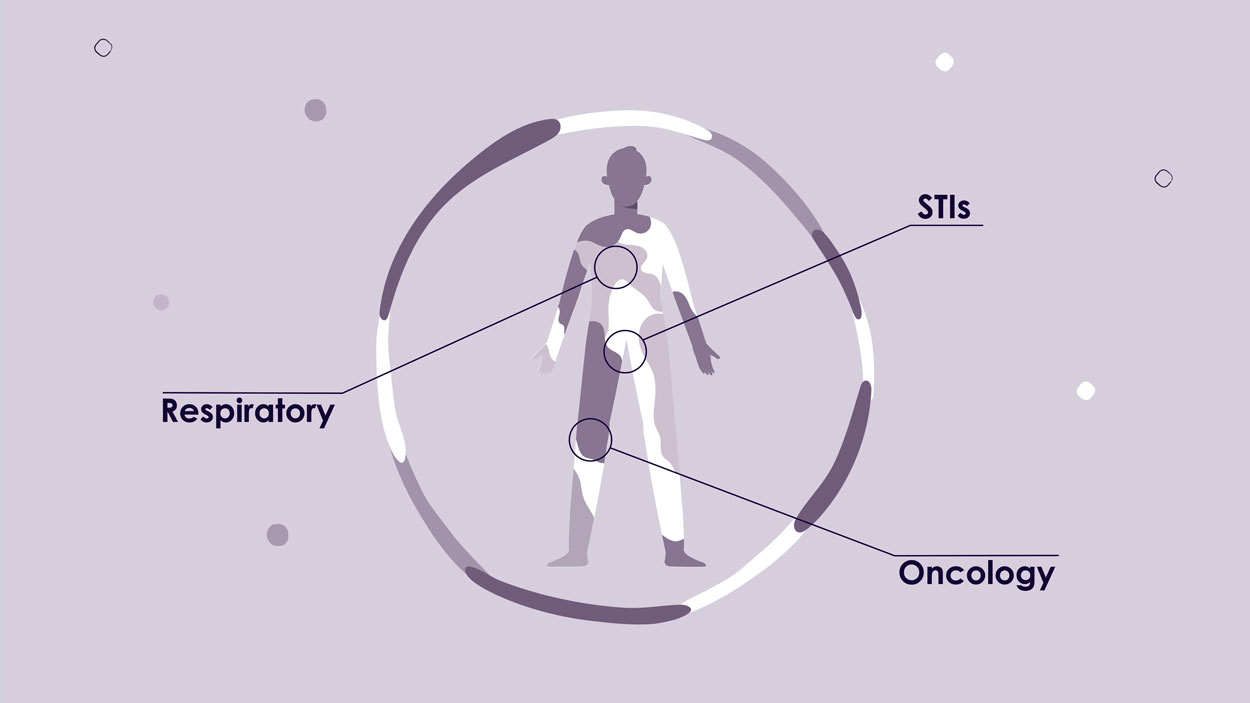
Patient education for a provincial renal program. Someone starting dialysis is being handed a lot of information on a bad day, so this had to be accurate and calm at the same time. Pacing did more of that work than the illustration did.
Best for: patient education where the viewer is anxious.
Table of Contents
2. What is PGT-A?
Preimplantation genetic testing, explained for patients deciding whether to have it. A genuinely technical subject aimed at people with no clinical background, which is the hardest kind of medical brief and also the most common one we get.
Best for: explaining a clinical procedure to the patient choosing it.
3. Mental health animation
Animation suits mental health subjects because it can show an experience without asking a real person to represent it on camera. Tone and color carry most of the weight here.
Best for: sensitive subjects where casting a real person would be intrusive.
4. Disability Rights Oregon
A nonprofit explaining what it does and who can use it. Accessibility mattered more than polish on this one: clear contrast, unhurried narration, and no visual idea that only works if you catch it first time. More of this kind of work is on our nonprofit video production page.
Best for: service explanations that have to reach everyone.
Choosing between 2D and 3D
1. Ask whether depth is doing any work
If the viewer needs to understand where something sits inside the body, or how a device physically moves, that’s a 3D job. If they need to understand a sequence or a decision, 2D will explain it faster and for less. Our 3D animation and 2D animation pages cover both.
2. Mixing the two is normal
A common build is a 2D video with one 3D sequence at the point where the mechanism has to be shown properly. You pay for 3D on the fifteen seconds that need it instead of the whole runtime.
3. Patient-facing work rarely needs photoreal
Highly realistic anatomy can be uncomfortable for a patient audience. Simplified, accurate illustration usually communicates better and costs less.
4. Plan for the review cycles
Medical and regulated projects carry more approval stages than anything else we produce. Those rounds, not the animation, are why a healthcare project runs longer than a comparable commercial one. Ask early how many sign-offs your content needs and who owns each of them.
What medical and healthcare animation cost
Patient education and 2D healthcare explainers sit at $5,000 to $10,000. Custom 3D and mechanism-of-action work typically runs $10,000 to $25,000. Larger programs and video series start around $30,000.
Two things move a healthcare quote that don’t move a normal one: how much scientific detail has to be modeled, and how many approval rounds the content has to survive. Both are worth pinning down before you brief anyone. The full tiers are in our video cost guide, and healthcare video production covers the service.
Frequently asked questions
What is medical animation used for?
Mechanism-of-action videos, device demonstrations, patient education, surgical and clinical training, and investor or sales communication. Any topic where the science is hard to see, or hard to put into words, is a candidate.
What is the difference between 2D and 3D medical animation?
2D is faster and cheaper, and it suits patient education and simpler mechanisms. 3D adds depth and physical realism, which matters for anatomy, devices, and detailed mechanism work. Plenty of projects use both in one video, and that’s usually the right answer.
How do you make sure the content is accurate?
Your experts review the script and the storyboard before animation starts, and we build only from material you’ve given us. Nothing gets invented to fill a gap. If a claim can’t be supported, we cut it rather than animate it.
Can you work within a regulated review process?
Yes. Tell us at kickoff how many rounds you need and who signs each one, and we’ll schedule them as stages rather than leaving them to pile up at the end.
How long does a healthcare animation take?
Six to eight weeks is realistic for a single video, which is longer than a comparable commercial project because of the extra review stages. A series takes longer overall but less per module.
Do you produce healthcare video beyond medical animation?
Yes. Patient education, healthcare software explainers, mental health and awareness content, nonprofit health work, and staff training are all part of what we do.
The takeaway
Most healthcare briefs aren’t medical animation. They’re ordinary explainers with an unusually high accuracy bar and an unusually long approval chain. Decide which one you’re buying, get an expert onto the script early, and only pay for 3D on the seconds that actually need it.
Larry is the founder and Chief Storyteller at Creamy Animation, founded in 2009. He leads a team that creates story-driven videos for businesses and nonprofits. 15+ years in video strategy and production, specializing in SaaS, B2B, and nonprofit storytelling. A marketer, designer, and animator, Larry has overseen the production of more than 1,500 videos for Fujitsu, Logitech, Warner Brothers, NFL, Blockdaemon, Astronomer, Canonical, and 370+ others.
For Larry, God is first, and everything else is a blessing that comes from serving Him. When he’s not working, he’s hanging out with his wife and three kids, playing the piano, or pursuing his filmmaking side hustle.