Explainer Video Script Examples: 4 Samples + Template (2026)
A 60-second explainer gives you about 150 words. That’s the whole budget, and it’s why the script is the stage where a video is won or lost. Below are four full sample scripts, a fill-in template you can copy, and two of our own videos so you can hear the structure working.
by
Larry Mutenda
| Chief Storyteller at Creamy Animation •
Updated: September 8, 2026
How is an explainer video script structured? Four parts: a hook, the solution, how it works, and one call to action. A 60-second script runs about 140 to 160 words, because voiceover reads at roughly 150 words a minute. Four full sample scripts and a fill-in template are below.
What an explainer video script is
It’s the voiceover plus notes on what happens on screen. That’s the whole document. It’s also the only stage of production where changing your mind is free, which is why we won’t start a storyboard without an approved one.
The word count is the constraint that catches people out. At about 150 words a minute, a 60-second video gives you around 150 words in total. That’s a page of notes compressed into four short paragraphs, so every line has to be carrying something.
Script or storyboard first?
Script, always. The script decides the message and the order, and the storyboard turns that into pictures. Do it the other way around and you end up writing narration to fit scenes that were drawn before anyone agreed what the video was saying. That’s an expensive thing to unpick.
The four-part structure at a glance
The word targets below are for a 60-second video. Treat them as a budget instead of a rule: if the hook runs long, something later has to come out.
#
Part
What it has to do
Target words
Roughly
1
Hook
Name a problem the viewer already has
25–35
0:00–0:10
2
Solution
Introduce the product as the answer, in one line
20–30
0:10–0:20
3
How it works
Two or three steps that make it real
60–80
0:20–0:50
4
Call to action
One next step, and only one
15–20
0:50–1:00
Total
140–160
60 sec
Four sample explainer video scripts
These four were written for this page as teaching examples. The companies in them are invented, so you can lift the structure without lifting a real brand’s copy. Each one runs close to 60 seconds when you read it aloud at a normal pace.
Hook. Your team runs on a dozen tools and none of them talk to each other. Updates get lost. Work gets done twice.
Solution. Northline is one workspace where your projects, tasks, and files finally live together.
How it works. Plan the work on a shared board. Assign it, and everyone sees the same live status. When something changes, the whole team knows, without another meeting about it.
Call to action. Start free at northline dot com. Your first project takes five minutes to set up.
Table of Contents
2. Mobile app explainer script
Hook. Saving money is easy to plan and hard to actually do.
Solution. Tally is the app that saves for you, automatically.
How it works. Link your account. Tally reads your spending and sets aside small amounts you won’t miss. Watch the balance grow in real time, and move the money out whenever you want.
Call to action. Download Tally and put your savings on autopilot.
Notice how much shorter this one is. Consumer apps usually need less setup than B2B software, so the hook can be a single line.
3. Service business explainer script
Hook. Finding a reliable contractor should not feel like a gamble.
Solution. Homebase connects you with vetted local pros for any job around the house.
How it works. Tell us what you need. We match you with rated pros in your area. Compare quotes, book a time, and pay securely through the app.
Call to action. Post your first job on Homebase today. Quotes are free.
4. Nonprofit explainer script
Hook. Every morning, thousands of kids in this city start school hungry.
Solution. Mealshare changes that, one breakfast at a time.
How it works. Your donation funds a morning meal at a local school. Teachers hand it out. No forms, no stigma, no child singled out.
Call to action. Give ten dollars and feed a child for a month at mealshare dot org.
Cause scripts are the one case where the hook can be emotional instead of practical. The structure underneath it does not change.
The same structure in two real videos
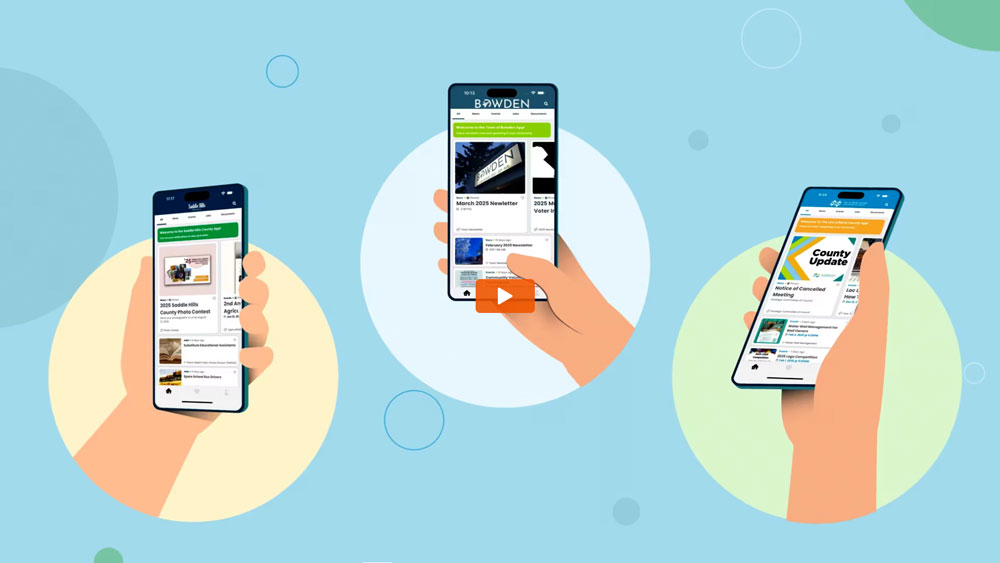
Both of these are ours. Listen for the four beats: problem, product, how it works, one action at the end. Last verified September 2026.
Abuzz, a student engagement platform. The product isn’t named until the problem has been stated, which is the hook doing its job.
Augmentt, an animated demo for an early-stage software company. This one spends more of its runtime on the how-it-works section, which is normal when the product itself is the argument.
Fill-in explainer script template
Copy this and replace the brackets. Keep the finished thing near 150 words for a 60-second video, then read it out loud with a timer.
Hook. Does your [audience] struggle with [problem]? It costs them [specific pain]. Solution. [Product] is the [category] that helps [audience] [main benefit]. Step 1. [The first thing the user does]. Step 2. [What the product does in return]. Step 3. [The result the user ends up with]. Proof. Trusted by [named customer or number], [product] [one supporting point]. Call to action. [One clear next step] at [where to go].
Five things that make a script better
1. Read it out loud with a timer
This finds every problem in about ninety seconds. Sentences you stumble over are sentences a voice artist will stumble over, and the timer tells you exactly how much you need to cut.
2. Write for the ear
Short sentences, plain words, one idea at a time. A sentence with a subclause in the middle works on a page and falls apart in narration.
3. Cut every word the picture is already saying
If the animation shows a file moving between two people, the voiceover doesn’t need to say the file moves between two people. This is where most of your spare seconds are hiding.
4. One call to action
Two options is one too many. Pick the single action you want and let the rest of the site handle everything else.
5. Get the on-screen notes in early
A script with a visual note beside each line gets approved faster, because reviewers can see what they’re agreeing to instead of imagining it.
Do you have to write the script yourself?
No. Scriptwriting is included in every production we run, at every tier, and it’s one of the stages we wouldn’t skip even if a client asked us to. If you already have an approved script we’ll work from it, and if you have a rough draft we’ll develop it with you.
For reference, a standard 60-second explainer with script, storyboard, animation, voiceover, and sound runs $5,000 to $10,000. The full tiers are in our explainer video cost guide, and our longer guide to writing an explainer script goes deeper into method.
Frequently asked questions
How long should an explainer video script be?
About 140 to 160 words for a 60-second video. Voiceover reads at roughly 150 words a minute, so word count is a reliable proxy for runtime. Read it aloud to check.
What are the parts of an explainer video script?
A hook that opens on the problem, a solution line that introduces the product, a short how-it-works section of two or three steps, and one call to action.
Can I use these sample scripts for my own video?
Use the structure freely. The companies in them are invented for this page, so the wording won’t fit a real product without rewriting, which is what the template further up is for.
Should the script include what happens on screen?
Yes, at least as short notes. A two-column script with narration on one side and visual direction on the other gets approved faster, and it gives the storyboard artist something to work from.
Who writes the script on a Creamy project?
We do, working from your material and a kickoff call, and we get it signed off before storyboarding begins. If you’d rather write it yourself, we’ll edit and time it instead.
How many revision rounds does a script get?
Script revisions are part of every project, and this is the cheapest stage to spend them. Changes here cost hours. The same changes after animation cost days.
The takeaway
Almost every weak explainer is a script problem in disguise. Four parts, about 150 words, one call to action, and read out loud with a timer before anyone draws a single frame.
Larry is the founder and Chief Storyteller at Creamy Animation, founded in 2009. He leads a team that creates story-driven videos for businesses and nonprofits. 15+ years in video strategy and production, specializing in SaaS, B2B, and nonprofit storytelling. A marketer, designer, and animator, Larry has overseen the production of more than 1,500 videos for Fujitsu, Logitech, Warner Brothers, NFL, Blockdaemon, Astronomer, Canonical, and 370+ others.
For Larry, God is first, and everything else is a blessing that comes from serving Him. When he’s not working, he’s hanging out with his wife and three kids, playing the piano, or pursuing his filmmaking side hustle.