Blockchain Explainer Video Examples, Types & Cost (2026)
Crypto products have a particular problem: there’s nothing to point a camera at. A node, a validator, a token moving between wallets. None of it looks like anything until somebody decides what it should look like. Here are two web3 videos we produced, the six formats teams ask us for, and what they cost.
Updated: October 2, 2026
What are blockchain explainer videos? It’s animated video that explains blockchain, crypto, and web3 products. It gives visual form to things that have none, like a transaction crossing a network or a token being minted. A standard crypto explainer costs $5,000 to $10,000.
Blcochain Explainer Video Examples
The first reason is that the category has no physical form. There’s no product to photograph, no factory to film, and no screen that shows the mechanism you’re actually selling. Somebody has to invent the visual language before a single frame gets animated, and that invention is the real work on a web3 project.
The second reason is trust. Most people meet a project through a website they’ve never heard of, and they’re deciding in about a minute whether it seems real. A clear, well-made explainer doesn’t prove anything about a protocol, but a confusing one loses people who would otherwise have kept reading.
A note on accuracy
Web3 audiences fact-check hard. Getting a mechanism visually wrong, or overstating what a protocol does, costs more credibility here than in any other sector we work in. We check the script against your documentation before anyone starts drawing, and we’d rather cut a claim than animate one we can’t support.
How long these should run
From our experience, 60-90 seconds for an overview or product explainer. Past that, you’ve usually got a protocol explainer and a brand film competing for the same runtime, and both lose.
The six types of Blockchain explainer videos
Six formats cover the briefs we get from web3 teams. The ranges follow the tiers in our video cost guide.
#
Type
What it explains
Where it runs
Typical range
1
Protocol and product explainer
What the product does and how it works
Homepage, launch, ads
Standard, $5,000–$10,000
2
Tokenomics explainer
Supply, utility, and distribution
Token launches, investor decks
Standard, $5,000–$10,000
3
How-it-works walkthrough
The wallet or dApp user journey
Onboarding and support
Standard, $5,000–$10,000
4
Brand and launch film
Position and vision, not mechanics
Mainnet launch, fundraise
Premium, $10,000–$25,000
5
Educational series
Wallets, staking, gas, custody
Community, help center
Priced as a series
6
3D animation
Hardware wallets, devices, game assets
Product pages, campaigns
Premium, $10,000–$25,000
Blockchain Explainer Videos We Produced
These are the two web3 productions of ours we can show publicly, and a fair amount of what we’ve made in this space is still under NDA. Both were made for real products, one infrastructure and one consumer, which is a useful contrast because the two ends of this market need very different videos. No view or conversion figures are attached, because we don’t publish client performance data. Last verified September 2026.
Blockchain infrastructure, sold to institutions rather than to individuals. Nodes, networks, and staking are the subject matter, and none of them are things you can point at. We built a consistent visual language for them in motion graphics, then reused it across the video so the audience only had to learn it once.
Best for: infrastructure and protocol products with an institutional buyer.
Table of Contents
2. CryptoSea
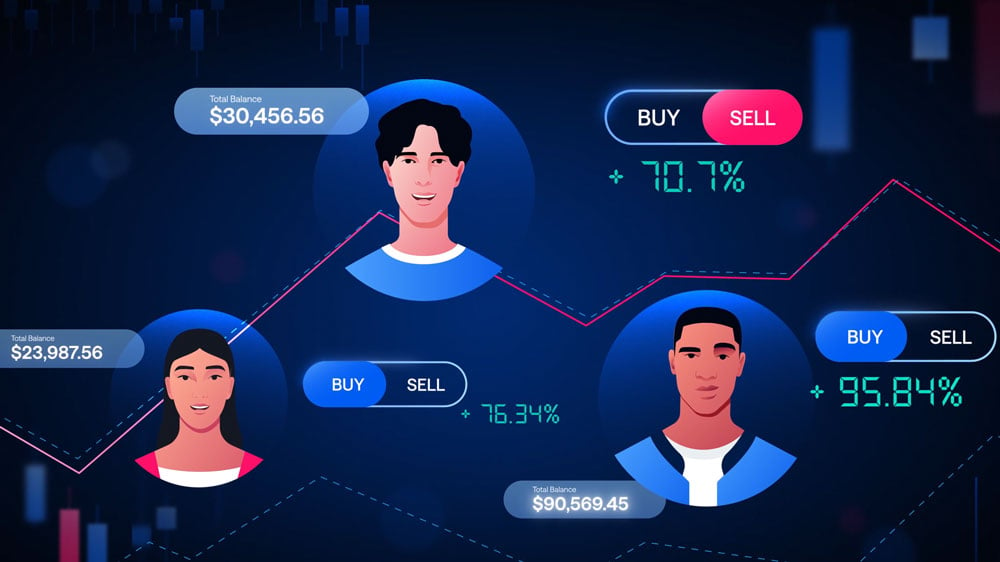
The consumer end of the same market. This one opens with what a first-time user is actually trying to do, then shows the app doing it. There’s almost no protocol language in the script, which was deliberate. If someone has to know what a mempool is before your video makes sense, you’ve lost most of the audience.
Best for: wallets and apps aimed at first-time users.
How to brief a blockchain explainer video project
1. Pick one audience and commit
A video for developers and a video for first-time users can’t be the same video. Trying to serve both produces something slightly wrong for everyone. If you need both, make two short ones.
2. Choose one metaphor and stay with it
Pick a single visual system for the mechanism, whether that’s a ledger, a network, or a vault, and use it consistently. Switching metaphors halfway through is the most common reason a crypto explainer stops making sense.
3. Lead with the benefit, not the architecture
The architecture is why it works. The benefit is why anyone stays. Open on what the viewer gets, then explain the mechanism underneath it.
4. Assume the script will change
Web3 products move fast and roadmaps shift mid-production. We’ve had claims change between storyboard and final delivery more than once. Building in modular scenes means a line can be swapped later without re-animating the whole video.
How Much A Blockchain Explainer Video Costs
Standard 60-second crypto and blockchain explainers run $5,000 to $10,000. Premium work with custom characters, complex 3D, or a full launch film runs $10,000 to $25,000, and multi-video campaigns go above that. Our AI-assisted entry-level animation starts at $2,500 to $4,000, though it’s a poor fit for anything where accuracy matters.
Scene count drives the price more than runtime does. Our video cost guide has the tiers, and if you’re pre-launch, SaaS video production covers how we work with early-stage teams.
Blockchain Explainer Video FAQs
What is blockchain explainer video used for?
Explaining protocols and products, breaking down tokenomics, walking through wallet and dApp journeys, and supporting launches. Any web3 idea that’s hard to explain in a paragraph is a candidate.
Can you explain tokenomics in a video?
Yes. Animated charts and diagrams handle supply, utility, and distribution far better than a whitepaper section does, mostly because the build order controls what the viewer looks at first.
Should a blockchain explainer video be 2D or 3D?
Most are 2D and motion graphics, which suit abstract systems. 3D animation earns its cost on hardware wallets, devices, and game or metaverse assets. We produce both.
Can you animate our dApp or wallet interface?
Yes. We build your screens as animation assets, which lets us slow down the moment that matters and skip the three taps that don’t.
How long does production take?
Plan on four to six weeks from kickoff for a 60- to 90-second explainer. In this sector it’s usually the launch date that sets the schedule, so tell us the date early and we’ll work back from it.
Do you sign an NDA?
Yes. Pre-launch work under NDA is normal for us, and we won’t show a project publicly until you’ve released it.
The takeaway
A blockchain explainer is mostly a translation job. Choose one audience, choose one visual metaphor for the mechanism, open on the benefit, and keep it under ninety seconds. The animation is the easy part once those four decisions are made.
Author: Larry Mutenda
Founder & Producer: Creamy Animation
Larry is the founder and Chief Storyteller at Creamy Animation, founded in 2009. He leads a team that creates story-driven videos for businesses and nonprofits. 15+ years in video strategy and production, specializing in SaaS, B2B, and nonprofit storytelling. A marketer, designer, and animator, Larry has overseen the production of more than 1,500 videos for Fujitsu, Logitech, Warner Brothers, NFL, Blockdaemon, Astronomer, Canonical, and 370+ others.
For Larry, God is first, and everything else is a blessing that comes from serving Him. When he’s not working, he’s hanging out with his wife and three kids, playing the piano, or pursuing his filmmaking side hustle.