Get an estimate in 60 seconds. No email required.
 by
Larry Mutenda
by
Larry Mutenda
What are the benefits of explainer videos? The main benefits of explainer videos are faster understanding, more trust and more confident buying decisions. In Wyzowl’s 2026 video marketing report, 96% of people said they had watched an explainer video to learn more about a product or service. Explainers also cut support questions, keep training consistent and make numbers easier to follow.
An explainer video is a short video that explains one product, service, process or idea. It can be animated, filmed in live action or a mix of both. The ones in this list run from 22 seconds to just under seven minutes.
Explainer video benefits fall into three groups. They help people understand. They help people trust you. They help people act. Each of the 10 benefits below comes with the evidence behind it and a video we produced that shows it at work.
If you are asking why use explainer videos at all, start with how people already behave. Wyzowl’s 2026 report found that 96% of people have watched an explainer video to learn more about a product or service.
We kept only benefits that have published evidence behind them. For survey figures, we used Wyzowl’s 2026 video marketing report, which surveyed 266 marketers and consumers in late 2025. For learning, we used Richard Mayer’s peer-reviewed research on multimedia learning. We left out popular figures that we could not trace to a primary source.
Each benefit is shown with one of our own videos. We picked a mix of SaaS, healthcare, nonprofit, training and public sector clients. We describe each video only from what its script says. Where a video has no script on file, we name only the client and the format.
A quick side-by-side before the full breakdown.
| # | Benefit | Example video | Client type |
|---|---|---|---|
| 1 | Explains a complex product | Keebo | SaaS |
| 2 | Builds trust | Lansky Law | Legal services |
| 3 | Shows what a camera can’t film | XLH and TIO therapy | Healthcare |
| 4 | Helps people understand | Small Business BC | Training |
| 5 | Answers support questions | Rancho Water | Public utility |
| 6 | Says more in less time | Corky’s | Restaurant |
| 7 | Turns a cause into action | Makers Making Change | Nonprofit |
| 8 | Helps buyers decide | Dr. Bill | Healthcare SaaS |
| 9 | Keeps training consistent | New Gold | Mining safety |
| 10 | Makes numbers easy to follow | Tourism Burnaby | Tourism |
An explainer video can explain a complex product in less time than it takes to read a product page. Most buyers would rather watch than read. In Wyzowl’s 2026 video marketing report, 63% of respondents said a short video is how they would most like to learn about a product or service. Text articles came a distant second at 12%.
Client: Keebo, maker of an automated Snowflake optimizer.
Project type: 2D animated SaaS explainer, 0:30.
Communication challenge: Show data teams a faster way to cut Snowflake costs than tuning queries by hand.
Creative approach: The script opens on the old way. You stare at queries or tweak warehouse settings by trial and error. Then it offers the alternative in one line.
The whole story fits in 30 seconds. It names the problem, the product and three proof points: patented AI, setup in minutes and savings within a couple of days. It ends with one ask. Book a demo.
Short scripts with one ask are the backbone of our SaaS video production work.
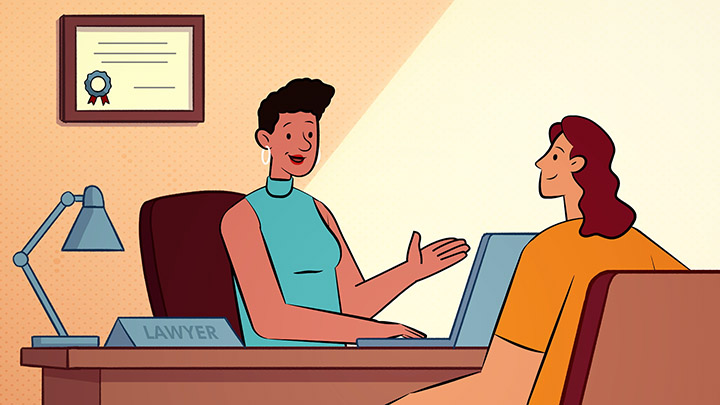
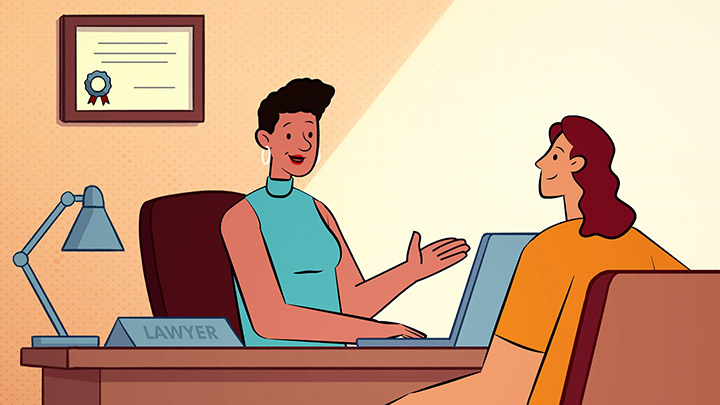
A live-action explainer builds trust because viewers see and hear real people. A credible person speaking on camera can be more convincing than a claim written in the company’s own words. This matters most when a service is personal and hard to judge before you buy it. Legal services are one example.
Client: Lansky Law, a law firm.
Project type: Live-action testimonial video, 1:22.
A testimonial puts the focus on the person speaking, not on the company. Viewers judge the service by how the people who used it talk about it. At under a minute and a half, the video can sit on a service page next to the details a buyer is already reading.
Animation can show processes that no camera can capture, such as how a drug works inside the body. Research on multimedia learning supports this use. In Richard Mayer’s review of the multimedia principle, people who got words and pictures did better than people who got words alone. Across 13 experimental tests, the median effect size was d = 1.35. One of the test lessons used animation with narration to explain how lightning forms.
Client: A pharmaceutical education project on XLH and TIO.
Project type: Mechanism of action animation, 1:32.
Communication challenge: Show how burosumab works in patients with X-linked hypophosphatemia (XLH) and tumour-induced osteomalacia (TIO).
Creative approach: The narration starts with the cause. Too much FGF23 makes the kidneys waste phosphate. Then the animation shows the antibody binding the excess FGF23 and blocking its signal.
The payoff is a chain of effects. The kidneys reabsorb more phosphate. The gut absorbs more. Serum phosphate rises and bone mineralization improves. Each step is something the viewer can watch happen instead of imagine. Our guide to types of animation styles compares this approach with other formats.
Explainer videos help people understand topics they have never had to think about before. In Wyzowl’s 2026 report, 93% of video marketers said video had helped increase user understanding of their product or service.
Client: Small Business BC.
Project type: Motion graphics training video with live footage, 3:18.
Communication challenge: Define workplace accessibility for small business owners and show that change is within reach.
Creative approach: The video opens with a question. What do you think accessibility means? It asks the same question again at the end.
In between, it defines barriers and uses the definition of disability from the Accessible Canada Act. It answers the cost worry with a figure it attributes to the Retail Council of Canada. More than two thirds of accommodations cost less than $500. When the opening question returns, viewers can check whether their own definition changed. We cover the full project in our Small Business BC case study.
A how-to explainer answers the questions your support team hears every week. In Wyzowl’s 2026 report, 57% of video marketers said video had helped them reduce support queries.
Client: Rancho Water, a water district.
Project type: 2D animated customer how-to, 6:37.
Communication challenge: Tell customers what a leak alert means and what to do next. The district can’t find or fix the leak for them.
Creative approach: The script follows the order a customer would act in. Log in to the water tracker. Check any recent repairs. Then isolate the leak at the meter.
The video first explains why the alert was sent. The district reads meters every hour and flags 24 hours of continuous use. It then teaches checks a customer can do alone. One example is adding a few drops of food coloring to a toilet tank and waiting ten minutes.
These are the questions a customer would otherwise phone in. The video answers them at the moment the customer needs them.
A short explainer can deliver one clear update in under 30 seconds. That short runtime makes it easy to post on social media, run as an ad or play on a screen in store.
Client: Corky’s, a Memphis restaurant.
Project type: Live-action promotional video, 0:22.
Communication challenge: Tell regular customers that dine-in service is back.
Creative approach: The script speaks to Memphis directly. It notes that customers have been ordering to go and using the drive-through. Then it invites them back inside.
The whole message is four sentences. Dine-in is back. You have been ordering to go. The dining room is open. We look forward to serving you. There is nothing left to cut.
Short spots like this are a common format in promotional video production. One clear message can travel across channels. Each placement may still need its own framing, captions or length.

A nonprofit explainer can turn a big cause into one thing a viewer can do today. We have produced over 100 nonprofit videos. This one shows the approach in under a minute.
Client: Makers Making Change.
Project type: 2D animated volunteer recruitment video, 0:56.
Communication challenge: Recruit volunteers to help people who can’t afford assistive technology.
Creative approach: The script names the barrier in the first sentence. Cost keeps assistive technology out of reach for many people. Then it lists the ways to help.
There are four ways in. Build a device from a request on the platform. Join a design challenge. Spread the word. Become a chapter leader. The web address is said twice, once near the start and once at the end. You can see more of this kind of work on our nonprofit video production page.
Good explainer videos help buyers make a decision. In Wyzowl’s 2026 report, 85% of people said they had been convinced to buy a product or service by watching a video. On the seller’s side, 83% of video marketers said video had directly increased sales.
Client: Dr. Bill, a medical billing app for doctors.
Project type: 2D animated product explainer, 1:05.
Communication challenge: Convince busy physicians that billing does not have to eat into patient time.
Creative approach: The script opens on the pain. Billing is stressful, confusing and time consuming. Then it asks why a doctor who chose patient care should have to master billing.
The middle of the video walks through features in the order a doctor would use them. Add a patient in a few seconds. Create a claim in a few taps. Get real-time alerts for premiums and other add-ons. The script closes with a proof point and a call to action. It states that 97% of claims submitted through Dr. Bill get paid. Then it asks viewers to create a free account.
A training explainer gives every worker the same message, in the same words, on every shift. A live briefing can change each time a different supervisor gives it. A video stays the same.
Client: New Gold, a gold mining company.
Project type: 2D animated health and safety culture video, 1:03.
Communication challenge: Explain what “safety is our number one priority” means in practice.
Creative approach: The script takes a slogan every worker has heard and defines it in plain terms.
It gives four meanings. Never compromise on safety. Look out for one another. Stop work if it is not safe. Respect colleagues who raise a hazard. The closing lines ask workers not to treat safety as a checklist item or a topic for the morning meeting only. For more on this kind of work, see our training video production page.
An animated explainer makes a report full of numbers easy to follow. It ties each figure to a person or a scene the viewer can picture.
Client: Tourism Burnaby.
Project type: 2D character animation, 2:55.
Communication challenge: Explain the total economic impact of tourism on the city. That includes spending that visitors never see.
Creative approach: Three kinds of visitors each carry one layer of the story. A family on a long weekend shows direct spending. A clean energy conference shows indirect impact. A ringette championship shows induced impact.
The numbers build on each other. Direct output is more than $730 million a year. Indirect output adds $330 million. Induced impact adds $220 million. The video ends on the total of over $1.28 billion in annual economic output. Data stories like this are a regular part of our corporate animation video production work.

The advantages of explainer videos come from planning, not from the format alone. These five habits show up across the videos above.
Pick one viewer before you write a word. Keebo speaks to data teams. Dr. Bill speaks to physicians. A script written for everyone is hard for anyone to follow.
Most of the videos above name the problem in the first sentence or two. Rancho Water opens on the alert the viewer just received. Makers Making Change opens on the cost of assistive technology. The viewer knows right away why the video matters to them.
Each video above carries one main idea. Corky’s says dine-in is back. New Gold defines what safety first means. If you have three messages, plan three videos.
Use animation for what a camera can’t show, like a drug’s mechanism or the ripple effect of tourism spending. Use live action when trust depends on real faces, like a testimonial. Many projects mix the two.
Tell the viewer exactly what to do next. Book a demo. Create a free account. Sign up to volunteer. One clear ask is easier to act on than a list of options.
The main benefits of explainer videos are faster understanding, more trust, fewer support questions and more confident buying decisions. They also keep training consistent and make complex numbers easier to follow.
Many people prefer to watch. In Wyzowl’s 2026 report, 63% said a short video is how they would most like to learn about a product or service. Only 12% chose a text article. Mayer’s research also found that people learn better from words and pictures than from words alone.
Long enough to answer the viewer’s question and no longer. Seven of the ten videos in this list run under two minutes. The longest is a step-by-step how-to, where the viewer wants every detail.
Choose animation when you need to show something a camera can’t capture, such as a process inside the body or a flow of money. Choose live action when trust depends on seeing real people. Many projects combine both.
Cost depends on length, style, how much custom animation or filming the script needs and how many rounds of revisions you want. You can see how we structure projects on our pricing page.
The benefits of explainer videos come down to one thing. They help the right viewer understand your message fast enough to act on it. The survey data and the research point the same way. People prefer short video, and they learn more from words and pictures together.
The ten videos above show that benefit in very different settings. A SaaS demo, a law firm testimonial, a safety culture video and a tourism impact report follow a similar plan. Know the audience. Open on their problem. Show what matters. End with one ask. We have spent more than 15 years making videos this way.

Larry is the founder and Chief Storyteller at Creamy Animation, founded in 2009. He leads a team that creates story-driven videos for businesses and nonprofits. 15+ years in video strategy and production, specializing in SaaS, B2B, and nonprofit storytelling. A marketer, designer, and animator, Larry has overseen the production of more than 1,500 videos for Fujitsu, Logitech, Warner Brothers, NFL, Blockdaemon, Astronomer, Canonical, and 370+ others.
For Larry, God is first, and everything else is a blessing that comes from serving Him. When he’s not working, he’s hanging out with his wife and three kids, playing the piano, or pursuing his filmmaking side hustle.