Get an estimate in 60 seconds. No email required.
 by
Larry Mutenda
by
Larry Mutenda
Which AI video production companies should I consider? Start with Creamy Animation, Superside and Kasra Design. Creamy offers an AI-Assisted tier for faster animated videos. Superside serves ongoing creative demand at scale. Kasra Design blends AI with directed 3D work.
AI is changing how videos get made. Some companies use it to speed up a few steps. Others build whole films with generative tools.
This list covers both approaches. Whichever you choose, ask which steps use AI and who checks the final result.
Compare the ten AI video production companies below.
| # | Company | Specialty | Best for | Notable clients |
|---|---|---|---|---|
| 1 | Creamy Animation | Story-driven animated videos | AI-Assisted animated video tier | Blockdaemon; CoPilot AI |
| 2 | Superside | AI-enabled video production | Ongoing enterprise creative demand | Microsoft; Amazon Pharmacy |
| 3 | Kasra Design | Hybrid 3D and AI video | AI-assisted work that keeps product details accurate | PayPro Global; Nansen |
| 4 | Maison Meta | Generative AI creative for fashion and beauty | Fashion and luxury visual campaigns | Moncler; Revolve |
| 5 | The Dor Brothers | AI films and commercials | Bold visual concepts for branded video | BOSS; eToro |
| 6 | Asteria | Cinematic AI-assisted production | Not published | |
| 7 | Promise | Story projects built with generative tools | Not published | |
| 8 | Secret Level | AI-native and hybrid production | Cinematic AI worlds with recurring characters | Coca-Cola; Raising Cane’s |
| 9 | Native Foreign | AI-enhanced brand storytelling | Character-led brand worlds | Toys”R”Us |
| 10 | Toonstar | AI-assisted animation studio | Fast-turnaround animated content | Not published |
We weighed four points. Clarity of the finished video. Quality and consistency of AI output. Transparency about tools and rights. Published results.
Creamy Animation wrote this roundup and put itself at number one. Factor that in.
The “best for” labels reflect our opinion. Client names come from each studio’s own site. We flag unpublished pricing and results.
We offer an AI-Assisted tier for animated videos at $2,500 to $4,000. AI tools help us speed up parts of production. People still write the script, direct the visuals and check every scene. Ask us which steps use AI on your project and how that affects cost and timing. We’ll also explain how we handle rights for any generated material. If your budget allows, our Standard and Premium tiers add more custom design and animation. We’ll recommend the tier that fits the job.
Our own explainer about how we work. It opens on a problem every brand has. Audiences are bombarded with ads, offers, coupons and dancing cats. Then it walks through our process: discovery, scriptwriting, storyboarding, voiceover and animation. A little humor keeps it light while the message stays simple.
Results: No public data
Superside offers subscription creative services that include video production. I’d evaluate it when you have a continuing queue of work. Map the expected demand before comparing its subscription with a single-project quote. Ask how priorities move through the queue and what happens when several launches collide. You also need to know which parts of the monthly commitment support video and which cover other creative or platform services. The useful question here is how generated scenes are reviewed for consistency. Ask about turnaround for AI-assisted video requests.
Results: No public data
Kasra Design offers 2D, 3D and AI-assisted video production. Its AI work sits alongside directed 3D, which helps when product details must stay accurate. Ask which steps use AI and which are handled by artists. Check how labels and surfaces stay consistent across shots. AI tools can distort small details. Request a sample where a product appears in several scenes. Confirm who owns the 3D models and any generated material. Ask about timelines. Then compare them with a traditional 3D project.
Results: No public data
Maison Meta’s published focus is generative AI creative for fashion, beauty, and luxury brands. I’d consider it when visual art direction is central to the campaign. Bring precise references for materials, silhouettes, and brand tone. Ask to review product details in motion before approving a full sequence. The work should preserve the features customers are being asked to evaluate, especially when the imagery represents a real item for sale. Take a sample into the planning discussion and assess how generated scenes are reviewed for consistency.
Results: No public data
The Dor Brothers offer AI commercials, branded films, and other video formats. I’d evaluate them for an idea that depends on unusual imagery or an expansive setting. Ask how the central message remains clear while the visuals become more ambitious. Review a sequence with the intended brand treatment applied. That is a better test of project fit than assuming an attention-getting portfolio film predicts your own campaign’s performance. An early checkpoint should cover how generated scenes are reviewed for consistency.
Results: The Dor Brothers report more than 20 million views in 48 hours for APEX. This is a studio-film reach measure, with no sales result implied.
It positions itself around licensed training data. That matters to brands worried about rights. Ask exactly which tools they use and how they document the source of generated material. Confirm who owns the outputs. AI production rules are changing fast, so get the rights terms in writing. Ask to see a finished brand project. Then check how human artists shaped the final result. Ask how quickly they usually deliver.
Results: No public data
Its focus is entertainment, so ask whether it takes on brand or business projects. If it does, ask how much of the final film is generated and how much is crafted by artists. Confirm the review process. Generated scenes can change from one version to the next, and you’ll want control over approved shots. Ask what a normal schedule looks like for them. Ask about the cost compared with a traditional studio.
Results: No public data
Secret Level produces AI-native and hybrid work for entertainment and brands. It suits AI video production where the creative idea calls for a cinematic world. Ask how they keep characters and settings consistent across a full sequence. A single striking shot is easy. A whole film is harder. Request a complete piece with recurring characters. Agree on approval steps before they generate large numbers of options. Ask about rights for generated material. Then confirm the cost of extra options or revisions.
Results: No public data
Native Foreign publishes brand storytelling that uses AI-enhanced production. I’d review it when a character or visual world needs to remain recognizable across several scenes. Start with the traits the audience must remember. Ask how the proposed workflow keeps those traits stable through revisions. You should also know which assets will be handed over so a future campaign can maintain a consistent appearance and tone. A useful proposal should address how generated scenes are reviewed for consistency. Ask about rights for generated assets too.
Results: No public data
Faster production can help when you need a steady stream of animated content. Ask which steps are automated and which are done by artists. Check the quality on longer pieces, since speed can show in consistency. Confirm usage rights for characters and voices, especially if any are AI-generated. Ask for a sample project with a brand. Then check how well the characters stay on model from scene to scene.
Results: No public data
AI video production uses AI tools during one or more production stages. AI-assisted work can combine human-created scripts, filmed material, conventional animation, and generated assets. Fully AI-generated video describes a much broader use of generation for the visuals, although people may still direct and edit it. Ask which stages use AI and how the finished work is reviewed.
Define what AI should contribute to the project. It might help explore visual concepts, create a setting, or adapt an approved asset. Then identify the details that must remain exact, such as a product shape or interface. Ask for a representative test before committing the full brief to a particular production method.
AI can lower costs for some steps, but story, design and review still take time. Our explainer video cost guide covers what drives price. Creamy’s tiers are:
Ask each company which steps use AI and how that changes the quote. Lemonlight describes about 2 to 3 weeks for its AI workflow. Treat that as one example.
AI video production is being used for work like this.
How to choose the right company
Use these steps to choose an AI video production company.
Get a clear list of where AI is used: script, images, voice, animation or editing. Each carries different risks. Knowing the list helps you judge quality and rights. Ask the company to put this list in the proposal. It becomes the reference for later reviews.
Ask which tools the company uses and what their terms say about ownership. Some brands need proof that outputs are cleared for commercial use. Get the answer in writing. Share the answer with your legal team before signing. They may have their own rules about AI tools.
Ask for a longer sample. A short clip can hide drift between shots. AI output can drift between shots. Check whether characters, colors and products stay the same throughout. Look closely at faces, hands and product details. These are the areas where AI output most often slips.
Find out who checks each scene before you see it. A person should review for accuracy, brand fit and errors. Find out how many review rounds come with the price. Ask whether you can see the reviewer’s notes on a past project. They show how seriously the checks are taken.
Decide whether you’ll tell viewers that AI was used. Some platforms and markets require it. Ask the company how it handles labels and metadata. Agree on the wording of any label before launch. That avoids last-minute changes to the final files.
AI video production can lower the cost of some steps. Creamy’s AI-Assisted tier runs $2,500 to $4,000, with Standard and Premium tiers from $5,000 to $25,000. Ask each company how AI changes its quote. Get the pricing in writing. Compare quotes on the same scope.
AI can shorten production, but scripting, review and fixes still take time. Ask each company for a dated plan. Compare it with a traditional timeline for the same video. Plan your review rounds into the schedule early. Leave time for fixes.
Choose a company that is open about its tools, rights and review process. Ask for longer samples. Compare consistency, ownership terms and disclosure plans across your shortlist. Ask what happens if a tool’s terms change during the project. Request a recent example.
Packages usually include script, AI-assisted visuals, voice, editing and final files. Human animation, extra versions and rights documentation may be separate. Request an itemized list. Check the rights terms for every generated asset. Ask which tools produced each asset and keep a record.
Hire a company when you need quality control and clear rights. Keep quick experiments in-house if your team has AI tools and time to learn them. Many brands test in-house and hire out for public-facing work. Share what you learn internally.
AI-assisted production uses AI for selected tasks, while fully AI-generated video relies more extensively on generation for its visual material. Human direction can still be involved in either approach. Ask the provider to describe the actual workflow. Review how it handles exact product details, continuity, corrections, and the final asset handoff.
Conclusion
AI can speed up video production, but people still make it good. Compare a few companies here on tools, rights and review. If an AI-Assisted animated video suits your budget, Creamy can help.
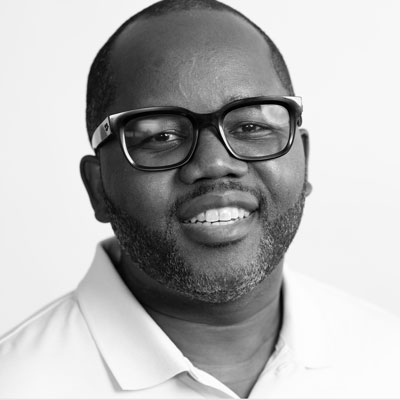
Larry is the founder and Chief Storyteller at Creamy Animation, founded in 2009. He leads a team that creates story-driven videos for businesses and nonprofits. 15+ years in video strategy and production, specializing in SaaS, B2B, and nonprofit storytelling. A marketer, designer, and animator, Larry has overseen the production of more than 1,500 videos for Fujitsu, Logitech, Warner Brothers, NFL, Blockdaemon, Astronomer, Canonical, and 370+ others.
For Larry, God is first, and everything else is a blessing that comes from serving Him. When he’s not working, he’s hanging out with his wife and three kids, playing the piano, or pursuing his filmmaking side hustle.